Total CSR spent in 2022 in India records at ₹25,932 Cr and private philanthropists donated about ₹1.05 Lakh Crore for various development projects. In fact, according to research by CSR Box with 300 companies, 38% companies with CSR spent more than their prescribed CSR budget. However, 29% companies could not spend their entire CSR budgets. While the prior shows the tremendous potential of philanthropy and CSR, the latter presents an opportunity for civil society organisations at grassroots.
In our engagements with Grassroots NGO partners, the biggest challenge that they face is finding donors for their cause. Although organisations with technical and geographical advantages often know how to leverage such opportunities, small grassroot organisations miss out on them. Thus, when it comes to small grassroots NGOs that work with vulnerable communities, fundraising still stands out as a top challenge.
Having worked for the capacity building of such small grassroots NGOs, we understand their challenges and try to dig deep to channel a solution. When we interact with the passionate leaders of these grassroot NGOs, two things come out crystal clear. One, they are highly driven for the betterment of their communities; second, they are saturated with the support and resources to work for the cause. Given the geographical, social, and technical gap, the grassroot NGOs are struggling to mainly identify and sustain a donor-receiver relationship. On the other hand, when talking to grantmakers and donors, it comes out that they struggle to find a ‘good’ grassroot organization to give funds to. What defines as ‘good’ is where the gap exists.
Geographic and socio-political conditions make the grassroot organizations work at a dynamic pace. It is both their strength and, sometimes, their weakness. They work in the remotest parts and have access to the most vulnerable communities. Moreover, they are the champions of last-mile delivery.
Because of the fluidity of the diverse issues they tackle and the dynamics involved in the community-focused action, maintaining pace is understandably difficult. But due to this, capacity maximization also runs at a slow pace, leading to challenges including keeping up with the trends in donor engagement. In the scenario, both guidance and networking opportunities are limited.
Grant-making organisations have a standard method of identifying developmental projects and finalizing funding opportunities. However, grassroots organisations find it difficult to cater to all the analysis indicators of the grantmakers due to barriers in language, operational systems, skills, technology, and many more.

This multi-dimensional distance between grassroot organisations and grant makers contributes to an ever-widening gap in understanding, leading to grassroot NGOs developing a hopelessness of ever getting the support of a large donor.
Critical challenges that these small grassroot NGOs face while fundraising include:
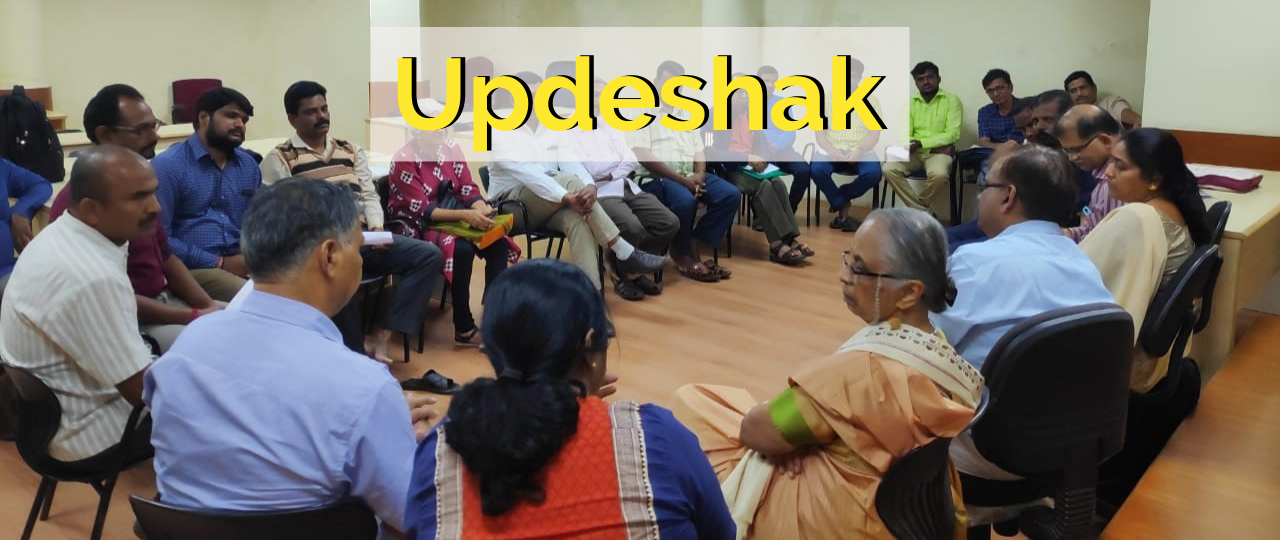
Identifying donors- In one of Dhwani’s Organisational development workshops, one of the grassroots leaders said, I hear that CSR has a lot of money. I want to know where these CSRs are?
Grassroot organisations spend most of their time on the ground and have extremely limited time and resources to network beyond their community. A very few can navigate the digital space to research the donors and philanthropies that align with their work. In this case, grassroot NGOs critically struggle to find donors who would build a long-term relationship.
Expressing themselves and their cause to the donors– A grassroots leader who could inspire you if you spent an hour with him or her on the ground may not be able to impress with a concept note in the same way. Weak documentation, language barrier, or the inability to present the big picture fail them to clearly express their cause to the donors. In some cases, the multi-faceted challenges of their community push them to take up multiple issues, and this comes across as a lack of focus.
Lack of standardization of expected documents– Small organisation also mean limited resources. The team around the leader also consists of members from the grassroots. Unfortunately, the skills and exposure of this team mostly fall short of meeting the expectations of the donors, and NGOs struggle to explain their programmes and plans in the way donors want to understand them. This often leads the donors to cancel out on the NGOs, citing ineffectiveness.
Lack of Visibility– Grassroots are still adapting to the advanced technology and the ways revolving around it. They struggle to raise awareness for the work they are doing among the sector, which includes other NGOs, donors, and policymakers, through mainstream communication channels. Thus, donors and grant makers do not necessarily get to know about the NGOs and their programmes to find an opportunity to fund them.
Hesitation to reach out to big donors and CSRs – Coming from small corners of the geography, the grassroot NGOs hesitate to reach out to large donors and CSRs. This hesitation is majorly due to underconfidence that has also developed due to multiple failures at even getting an encouraging response. We see organisations not excited to dedicate the efforts even when an opportunity is shared.
Struggle to write Elaborate Proposals– NGOs struggle to cater to the elaborate proposals that donors and grant makers seek. It is often found that these NGOs do impactful work but explaining it in words and numbers is always an unprecedented challenge. They often fail to articulate in a way to align with the donors’ vision and lose the opportunity to get funds.
The vicious circle– To fix this, NGOs must up their organisational capabilities, which obviously need skills as well as funds. A very few donors acknowledge the need to extend their funding to meet organisational strengthening needs. In cases where such efforts are invested, we see drastic changes and long standing change.

It is understandable that the flow of funds needs to be systemic to ensure impact generation. And to adhere to this dynamic, donor entities look for an elaborate understanding of the grassroot NGOs before deciding to fund them. While donors look for almost perfect figures in records, high-end impact measurements, and detailed portfolios of programmes; an understanding of the NGOs limitations can add perspective.
Most grassroots organisation come from a vulnerable position and tend to align with donor requests, though they may not fully align with their vision. In that case, understanding organisational strengths and weaknesses while also looking for opportunities to enable the NGO to rise to the next level will be a gamechanger. However important documentation is, if efforts are made, donors can understand the grassroot organisation closely by engaging with the community they work with, the NGO leaders, and direct beneficiaries. Perhaps this sense of relationship building can lead to the strengthening of the resource utilization process and bridge a little of the gap—an effective approach to sustainability as well.
From all the perspectives, organisational development plays an important role in making the fundraising process smoother. From a grassroots NGO point of view, investing in organisational development can bring about noteworthy impact in all processes. From the donors’ point of view, seeking opportunities to fund organisational development within grassroot NGOs will turn out to be effective. Recent initiatives, like Dasra’s Rebuild India Fund and EdelGive’s Grow Fund are great examples of funding that enables grassroots organisations to meet expectations and construct a sustainable bridge between the giving and receiving of funds.
According to the Indian Philanthropy report 2022, CSR contributions are expected to grow at 19% annually, with its share expected to reach about 32% of total private giving by FY 2026. In that case, identifying grassroot organisations and strengthening their potentials through innovative funding is a key angle to look upon.
Grassroots organisations might not be operationally as strong as the donors expect them to be, but they are second to none in the way they understand the needs of their community. They are always open to taking measures towards setting up their processes through organizational development. A holistic organisation development effort can drastically broaden the range of a grassroot NGO in multiple dimensions such as compliance, governance, project management, and technology.
On the other hand, grant makers adding a pinch of empathy in their partner evaluation strategy will boost the ambitions of the grassroots NGOs, who would otherwise get suppressed due to these gap dynamics.